
Journalism / Video / Writing
UF supports gaming on campus through funding initiatives
Gaming is everywhere these days. Data published by Statista in October 2025 showed more than 90% of internet users ages 16 to 24 play video games.
At the University of Florida, student leaders say that global trend is pushed further by growing institutional support.
That support is visible in the growth of student organizations, university-funded events and dedicated spaces for play, ranging from casual social gaming to competitive esports.
For Gator Gaming co-president Amelia Reeves, that growth has been noticeable.
“I would say definitely in recent years I have felt a lot more supported,” Reeves said.
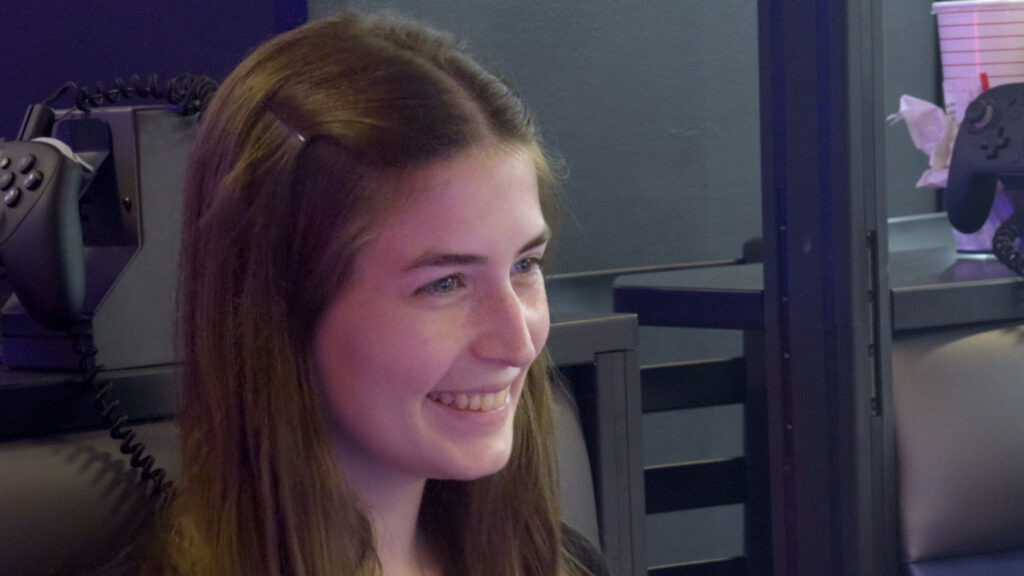
What began as a smaller student organization has grown into a Discord community of more than 3,500 members, according to Reeves. The group now hosts weekly gatherings, charity livestreams, and convention appearances. But their most notable offering is GatorLAN, a gaming tournament held at the Reitz Union.
Attendance data provided by organizers show GatorLAN Spring 2026 drew 1,304 attendees, including spectators, with 1,006 tournament participants competing across 51 tournaments. By comparison, Fall 2022 featured 557 participants across 17 tournaments. Organizers said the event has since expanded to include panels and a cosplay contest and is now recognized as a Signature Event, contracted and funded by the university.
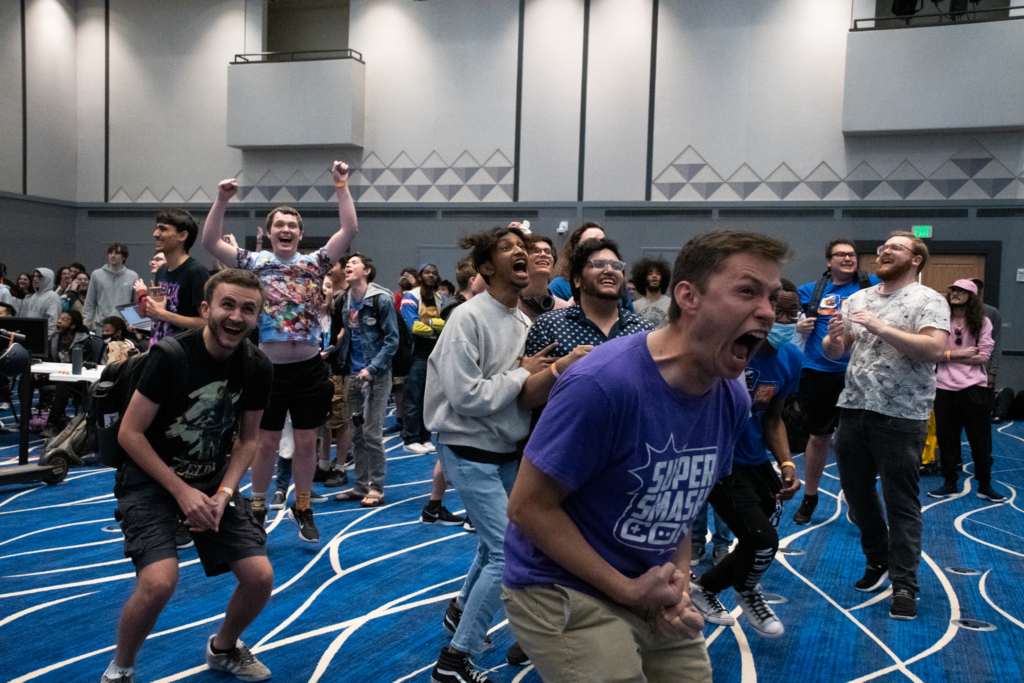
Super Smash Bros. Ultimate drew the largest single-game turnout this spring, with 228 participants.
Reeves said the organization’s growth reflects gaming’s social appeal just as much as its competitive side.
“Everyone can sit down and play a game of Mario Kart,” she said. “I think that’s really special.”
Gator Gaming represents the more casual gamer, but some UF student gamers take competition a little more personally.
That led to the emergence of Gator Esports, a competitive offshoot of the broader gaming community. That organization now includes about 200 players across 12 titles and is officially recognized through UF RecSports as a club sport.
Outgoing Gator Esports president Lucas Beasley, known in gaming circles as “Caesar,” said the organization receives funding for travel, team infrastructure and competitive operations.
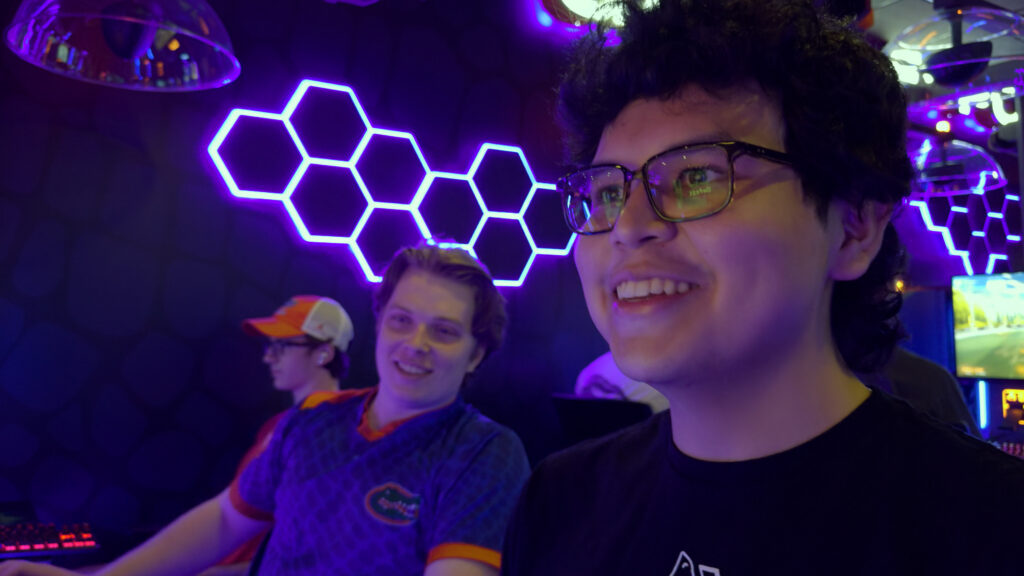
“It’s the same as UF Tennis,” Beasley said. “We do jerseys, team captains, all of what you imagine collegiate sports is like.”
The organization also has a physical home: The Gator Esports Center.
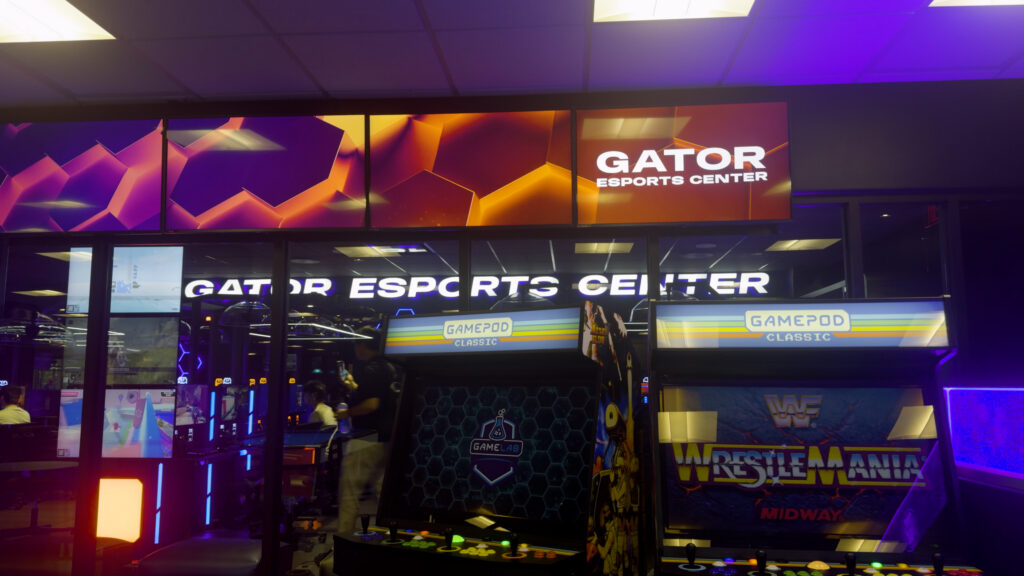
Located in the Reitz Union, the space includes gaming PCs, consoles, controllers and a library of games available to students. Beasley credited former Gator Esports leaders for pushing to make the center a reality, though he said they are unable to formally compete in the space due to logistical constraints.
Ironically, some say the center may currently serve casual players better than competitive teams.
“It’s not just for really hardcore gamers,” Reeves said. “If you have a UFID, you can just come here and play casually.”
This accessibility of gaming has helped foster communities beyond traditional esports.
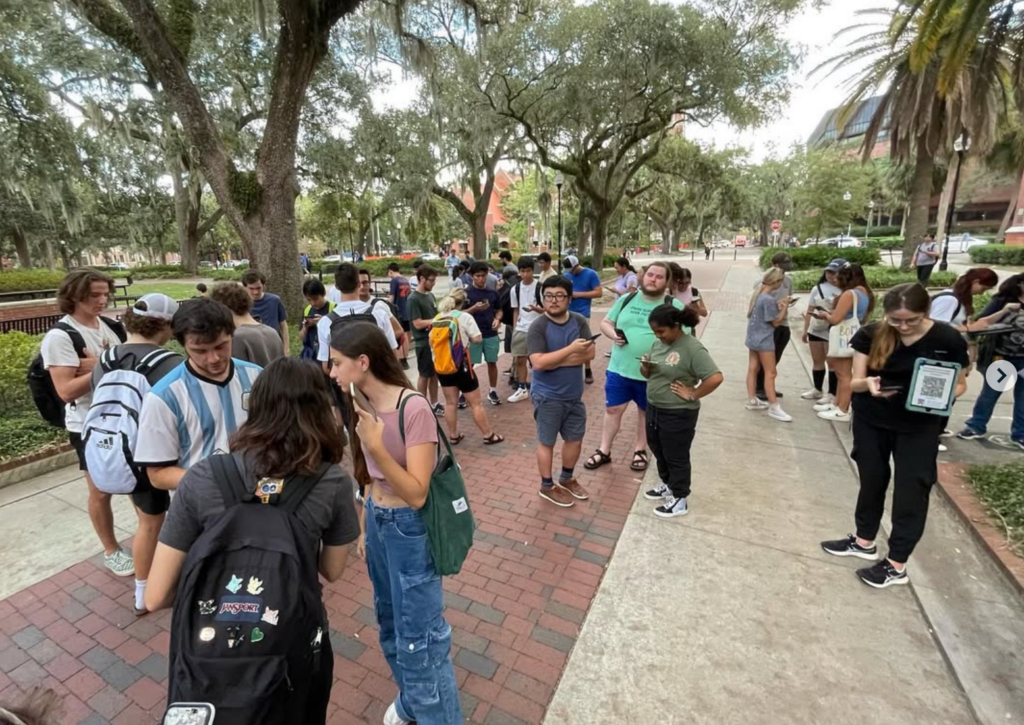
The Pokémon GO Club at UF, founded by Jillian Mersky, began as a Discord server promoted with a QR code taped to a lamppost in Turlington Plaza. Mersky said the server has since grown to roughly 1,000 members, with some meetups drawing as many as 150 players.
“If you see a large group of people walking in an oddly straight line but it doesn’t look like a tour group, we’re probably playing Pokémon GO,” Mersky said.
Mersky has also been recognized by the game’s developer, Niantic, as a community ambassador, giving her direct contact with developers and support for organizing official events.
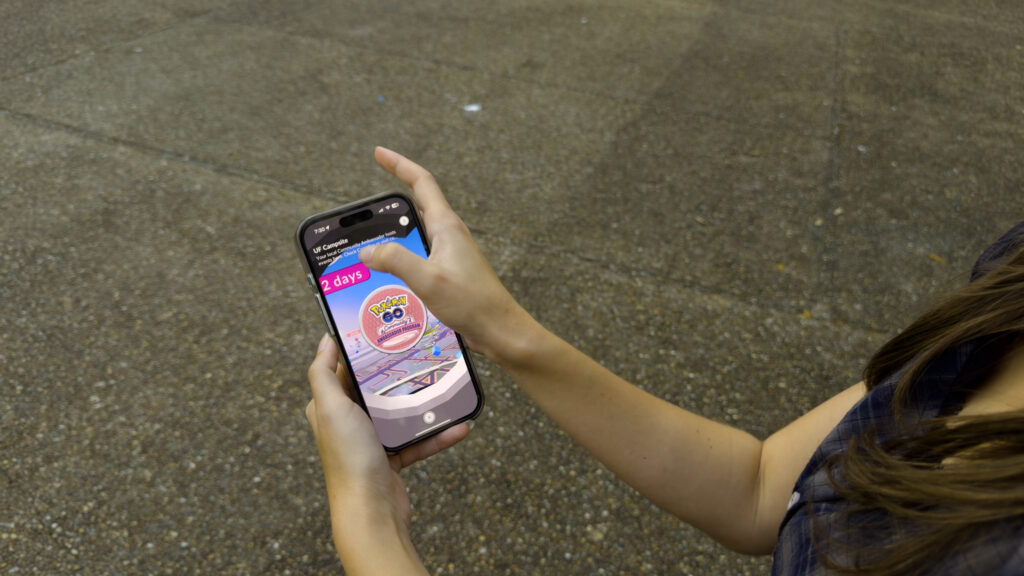
She said the game’s social dimension is central to its appeal.
“Their mission as developers is to get people out and get people with their community and get people interacting with each other,” she said.
Not all participants, she said, would necessarily identify as “gamers.”
But whether they are casual Pokémon GO players or more competitive Marvel Rivals team members, student leaders described gaming less as a niche hobby and more as a form of social infrastructure for students.
Gaming does not have to be confined to dorm rooms and Discord servers, as it is often imagined. It is showing up in funded events, recognized club sports and student life programming. What was once treated as a subculture is becoming part of the institution itself.
Description
This digital-focused video, assembled for a graduate Digital Storytelling class, highlights the efforts administrators at the University of Florida are making to create opportunities for students to game on-campus.
Details
- Released
- June 9, 2026
- Media
- Journalism / Video / Writing
- Format
- Multimedia digital piece
- Role
- Videographer, Writer, Editor, Reporter
- Location
- Gainesville, FL